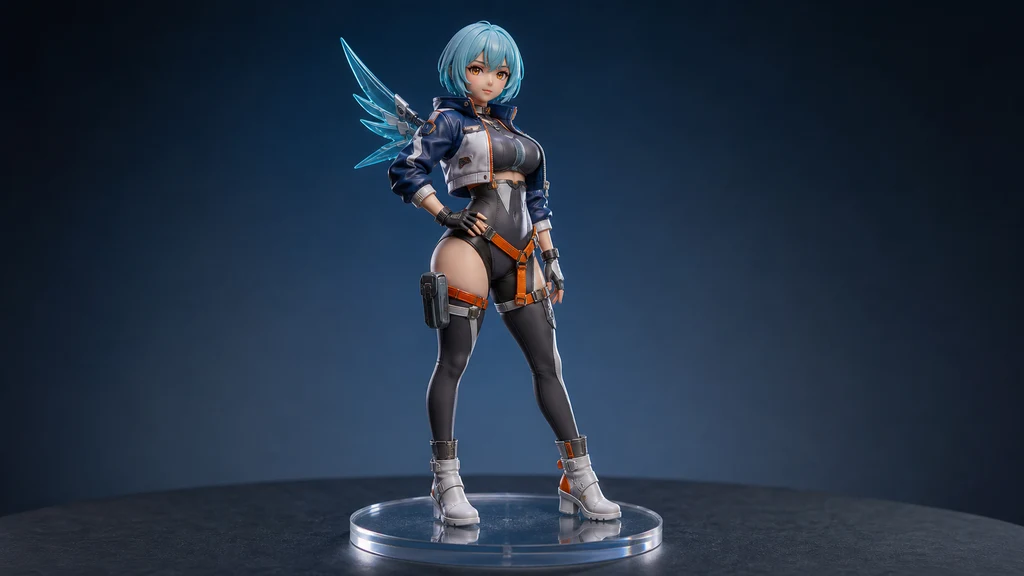
Typing “make it figurine style” can produce a mixture of a generic 3D character, a real person, and a toy photo. A convincing collectible is not one visual style. It is a set of physical miniature cues: scale, material separation, painted edges, assembly seams, a base, grounded shadows, and product-photography optics.
This guide creates one original adult character, Lumi, as an anchor and expands her into a turnaround, material study, diorama, and collector-shelf shot. The workflow avoids copying brands, protected characters, or artists and can be adapted to ChatGPT Images, Gemini, Midjourney, and similar tools.
This article reflects official OpenAI, Google, Midjourney, and Adobe guidance checked on July 28, 2026. Model features and terms can change, so confirm the latest documentation before production use.
Thumbnail prompt
Use case: product-mockup
Asset type: 16:9 landscape blog thumbnail and hero image
Primary request: Create a premium studio product photograph of an original 1/7-scale collectible figure named Lumi, an adult sky courier. She has a short cyan bob haircut, warm amber eyes, and a confident calm expression. Her original outfit is a navy-and-white cropped flight jacket over a charcoal bodysuit, orange utility straps, compact white flight boots, and a small translucent cyan wing-shaped energy device on her back. She stands in a dynamic but physically plausible pose on a circular clear acrylic base.
Scene/backdrop: dark navy-to-slate seamless studio gradient, subtle pedestal surface, ample clean negative space around the figure.
Style/medium: photorealistic premium painted PVC-and-resin collectible figure product photography, clearly a manufactured miniature rather than a real person.
Composition/framing: wide 16:9 landscape, full figure and entire base visible, three-quarter front view, figure centered slightly left, macro product-photo perspective with realistic miniature scale.
Lighting/mood: three-point softbox lighting, cool cyan rim light, warm key light, controlled soft contact shadow, polished catalog mood.
Materials/textures: satin PVC skin paint, fine sculpted hair strands, semi-gloss jacket, matte bodysuit, translucent energy part, tiny but believable paint separation, subtle mold seams and assembly joints.
Constraints: original character only; adult proportions; anatomically coherent hands and face; one figure, one base; no packaging; no text; no logos; no watermark; no extra limbs; no floating accessories; no resemblance to a real person or copyrighted character.
1. Define the character and the product separately
Begin with only the character facts that must not drift: adult age range, face, hair shape and color, eyes, three to five outfit anchors, signature accessory, and expression. Then use a separate product sentence such as “1/7-scale painted PVC-and-resin collectible figure” so the model understands that the output is a small manufactured object, not a person or a generic 3D render.
OpenAI’s official guidance recommends clearly stating purpose, subject, action, setting, and visual style, then adding framing, lighting, and constraints when they matter. Observable language such as “large softbox from the upper left” is more controllable than “beautiful lighting.”
| Design layer | What to specify | Figurine cue |
|---|---|---|
| Character anchor | Face, hair, outfit, signature colors | Same identity across scenes |
| Product format | 1/7 scale, collectible figure | Separates miniature from person |
| Materials | Painted PVC, resin, clear parts | Different reflections by surface |
| Construction | Mold seam, assembly joint, base | Manufactured physical object |
| Pose and support | Feet, support rod, center of gravity | Prevents floating renders |
| Photography | Macro product photo, softbox | Catalog-like presentation |
2. Build an anchor, then change one variable at a time
Once the first image works, attach it to later prompts and repeat exactly what must be preserved. Google’s current image-generation documentation recommends iterative, targeted edits and reusing earlier images for consistent alternate views. Midjourney also separates character and style references; identity and surface mood are easier to control when they are not collapsed into one vague instruction.
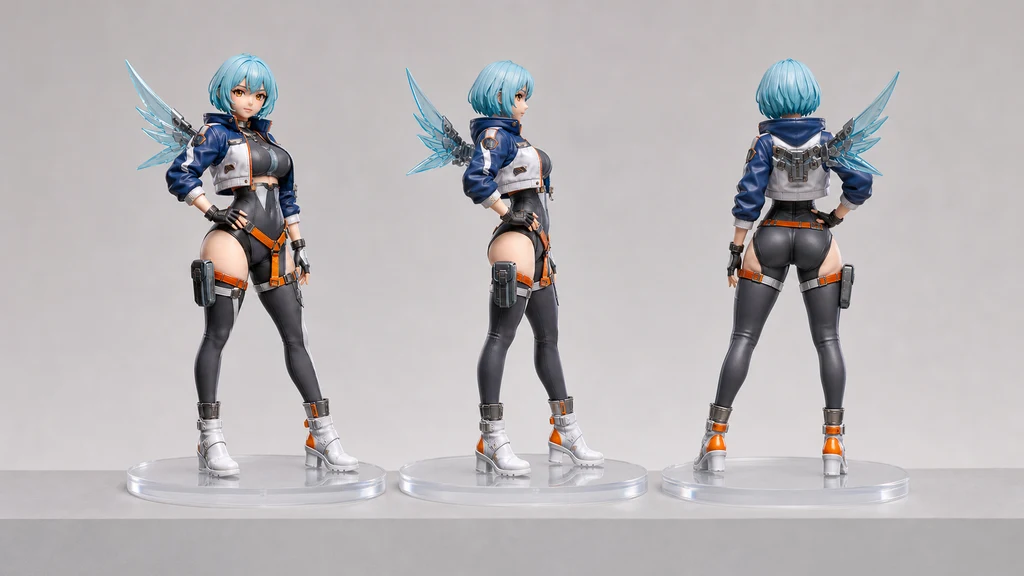
Image-generation prompt
Use case: product-mockup
Asset type: 16:9 landscape blog illustration showing a collectible figure turnaround
Input images: Image 1 is the identity and outfit reference for Lumi, the original adult sky-courier collectible figure.
Primary request: Show three separate physical copies of the same 1/7-scale Lumi figure arranged as a professional sculpt-review turnaround: front view, exact side profile, and back view. Preserve the same short cyan bob, amber eyes, facial design, navy-and-white flight jacket, charcoal bodysuit, orange straps, white boots, and translucent cyan wing device from Image 1.
Scene/backdrop: seamless light warm-grey studio cyclorama with a long neutral plinth.
Style/medium: photorealistic product photograph of painted PVC-and-resin prototypes, clearly miniature manufactured figures.
Composition/framing: wide 16:9, three evenly spaced full-body figures, all feet and clear circular bases visible, orthographic-feeling eye-level camera, generous margins.
Lighting/mood: broad diffused studio light with soft matching shadows, neutral color calibration.
Materials/textures: satin skin paint, sculpted hair grooves, semi-gloss jacket, matte suit, translucent wing parts, subtle mold seams.
Constraints: exact same character and outfit in all three views; adult proportions; no redesign; no pose variation beyond neutral stance; no text, labels, logos, watermark, packaging, extra figures, extra limbs, or cropped feet.
A turnaround reveals drift better than a single glamorous image. Compare hair length, jacket panel lines, wing attachment, boot height, and proportions from all views. Do not change face, outfit, pose, and background at the same time. Use a narrow instruction such as “change only the background; preserve the exact character.”
3. Move from a generic 3D render to painted materials
Do not make every part shiny. Describe skin as satin paint, a bodysuit as matte, jacket panels as semi-gloss, eyes as controlled glossy paint, and energy parts as translucent resin. Tiny paint separation, subtle mold seams, and assembly joints keep the object from looking like a perfectly smooth CG model.
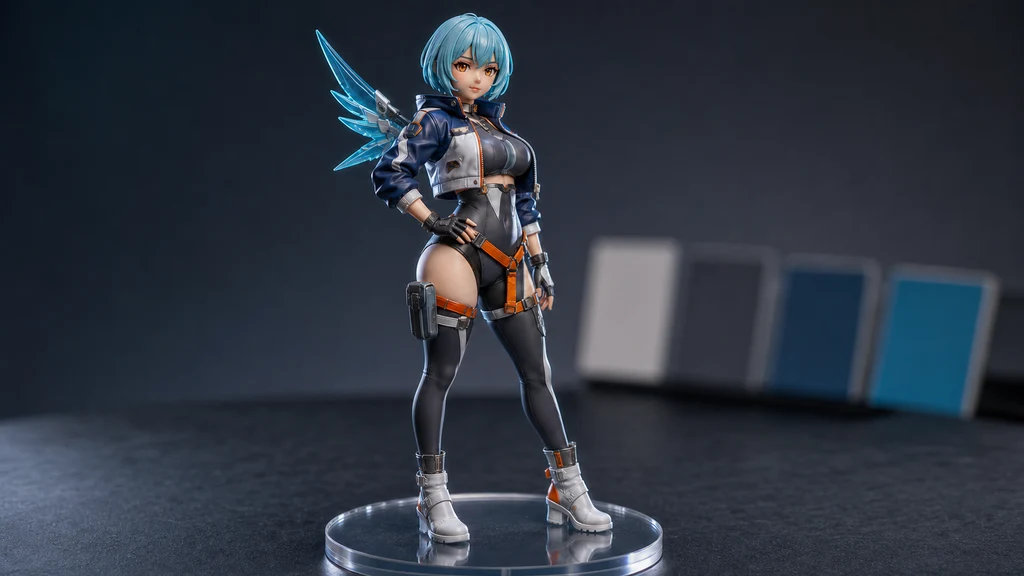
Image-generation prompt
Use case: product-mockup
Asset type: 16:9 landscape blog illustration about material and paint separation
Input images: Image 1 is the identity, outfit, and color reference for Lumi, the original adult sky-courier collectible figure.
Primary request: Create a premium macro product photograph of the same Lumi figure from chest to boots, posed on her clear base, emphasizing believable collectible-figure materials and craftsmanship. Preserve her face, cyan bob, navy-white jacket, charcoal suit, orange straps, white boots, and translucent cyan wing device.
Scene/backdrop: clean charcoal tabletop in a dark controlled studio, with only a few softly blurred neutral color-swatch chips in the far background.
Style/medium: photorealistic painted PVC-and-resin prototype photography, visibly a miniature figure rather than a human.
Composition/framing: wide 16:9 close three-quarter view, face and torso sharp, boots and base still visible, shallow depth of field.
Lighting/mood: large softbox key light, narrow cyan rim, soft fill, crisp but controlled specular highlights.
Materials/textures: matte bodysuit, semi-gloss jacket panels, satin skin paint, subtle hair sculpt lines, glossy eye paint, translucent cyan resin, fine panel edges, tiny assembly joints, realistic paint masks with no dirt.
Constraints: preserve character identity and outfit; one figure and one base; no text, logos, watermark, packaging, tools, human hands, exposed anatomy, extra limbs, or cropped face.
Adobe’s product-photo guidance likewise combines subject, pose, framing, light, and texture. Keep manufacturing cues restrained: too many scratches or deep seams can make a premium figure look damaged. Words such as “subtle,” “tiny,” and “controlled” are useful intensity controls.
4. Design physical support before dramatic silhouette
Dynamic poses often cause hand, foot, and floating-body errors. Define the silhouette, then state where weight is carried: two feet, one support rod, or a sculpted base. “Both feet physically supported,” “entire base visible,” and “grounded contact shadow” help the result read as a statue.
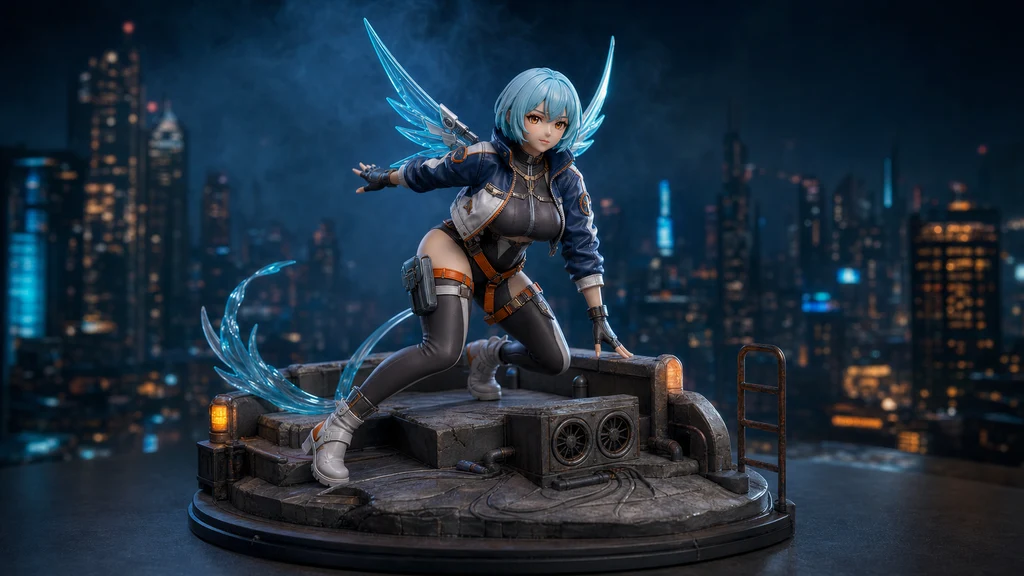
Image-generation prompt
Use case: stylized-concept
Asset type: 16:9 landscape blog illustration about pose, base, and miniature storytelling
Input images: Image 1 is the identity and outfit reference for Lumi, the original adult sky-courier collectible figure.
Primary request: Photograph the same 1/7-scale Lumi figure as a premium limited-edition diorama. Preserve the same face, short cyan bob, navy-and-white flight jacket, charcoal bodysuit, orange utility straps, white boots, and translucent cyan wing device. Give the figure a dynamic forward-leaning landing pose with both feet physically supported. The sculpted base is a miniature futuristic rooftop edge with small vents, cables, and translucent wind trails.
Scene/backdrop: dark navy studio with a softly blurred city-light backdrop that reads as a set, not a real full-size location.
Style/medium: photorealistic collectible diorama product photography, high-end resin statue finish, clearly miniature scale.
Composition/framing: wide 16:9 low three-quarter camera, full figure and entire diorama base visible, silhouette clean, no cropping.
Lighting/mood: cinematic cyan and amber rim lights, soft key on the face, subtle volumetric haze behind the figure, grounded contact shadows.
Materials/textures: painted resin base, brushed miniature metal, satin PVC skin, semi-gloss cloth-like jacket sculpt, translucent energy parts.
Constraints: one original adult character; preserve identity and outfit; physically plausible support points; no text, logos, watermark, extra characters, floating body parts, oversized weapons, or real-world brands.
A base should compress the character’s story rather than reproduce a whole environment. For a sky courier landing on a rooftop, three to five details—vents, cables, a warning light, and translucent wind trails—are enough. More props can turn the environment into the subject.
5. Validate the final result in a display context
Do not inspect only a white-background render. A glass cabinet, shelf, or packaging context makes scale, reflections, base thickness, and silhouette easier to judge. Use an unbranded box and abstract symbol instead of invented lettering to reduce accidental logos and gibberish text.
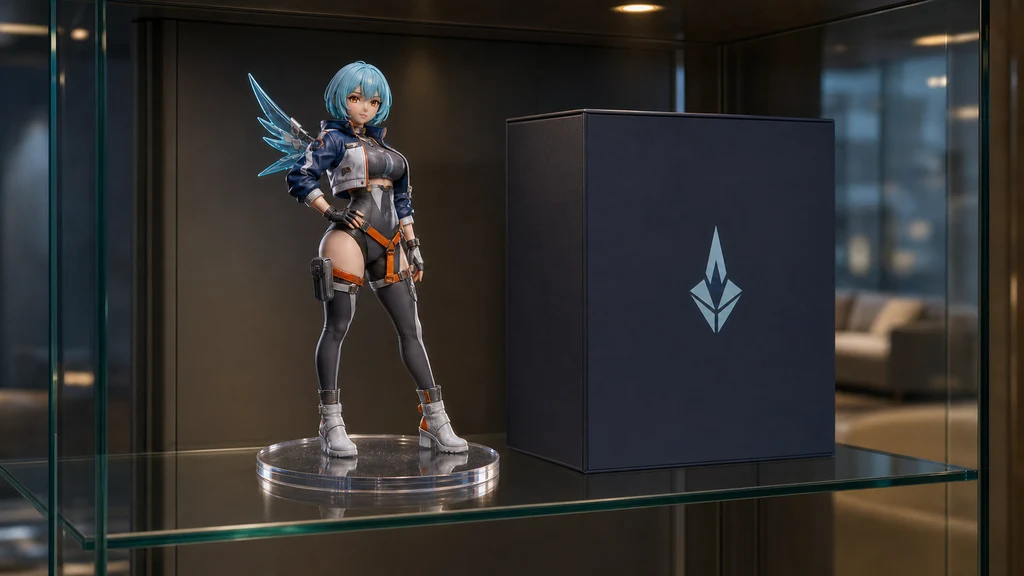
Image-generation prompt
Use case: product-mockup
Asset type: 16:9 landscape blog illustration about presentation and final quality check
Input images: Image 1 is the identity and outfit reference for Lumi, the original adult sky-courier collectible figure.
Primary request: Create a premium collector-shelf product photograph of the same Lumi 1/7-scale figure displayed inside a clean glass cabinet. Preserve the same face, short cyan bob, navy-white flight jacket, charcoal bodysuit, orange straps, white boots, translucent cyan wing device, and clear circular base. Beside it, place a simple unbranded matte navy presentation box with a small abstract cyan geometric symbol only, no letters.
Scene/backdrop: modern dark display cabinet with one shelf, softly blurred neutral room beyond.
Style/medium: photorealistic luxury collectible product photography, clearly a manufactured miniature.
Composition/framing: wide 16:9, full figure and complete base visible on the left-center, unbranded box on the right, balanced negative space.
Lighting/mood: warm cabinet spotlights mixed with a restrained cyan edge light, realistic glass reflections, soft shadow under the base.
Materials/textures: clean glass, matte cardboard box, satin PVC paint, translucent resin, subtle mold seams and precise paint separation.
Constraints: preserve character identity and outfit; one figure, one base, one box; no readable text, logos, watermark, brand marks, extra characters, cropped feet, extra limbs, or clutter.
Common failures and one-line fixes
| Failure | Likely cause | Corrective phrase |
|---|---|---|
| Looks like a person | Missing scale and product language | clearly a manufactured miniature |
| Looks like cheap plastic | One gloss level everywhere | separate matte, satin, semi-gloss, translucent materials |
| Appears to float | No base or contact shadow | entire base visible, grounded contact shadow |
| Character changes | Weak anchor or too many edits | preserve exact face, hair, outfit and proportions |
| Extra hands or wings | Overloaded pose and props | one figure, one base, no extra limbs or floating parts |
| Looks like pure CG | Surfaces are too perfect | subtle mold seams and tiny assembly joints |
Reusable figurine prompt template
Create a premium product photograph of an original [scale] collectible figure.
Character anchor: [adult original character, face, hair, expression, outfit, signature accessory].
Product definition: clearly a manufactured miniature, painted PVC-and-resin figure on [base type].
Pose and support: [pose], with [feet/support points] physically grounded and the entire base visible.
Materials: satin skin paint, [matte parts], [semi-gloss parts], [translucent parts], subtle mold seams and tiny assembly joints.
Camera and lighting: [camera angle and framing], macro product photography, [softbox/key/rim lighting], controlled contact shadow.
Preserve: exact identity, outfit, colors and proportions.
Constraints: one original adult character, one base, no text, no logos, no watermark, no extra limbs, no copyrighted character or real-person likeness.
Pre-publication checklist
- Is the full body and the entire base visible?
- Do face, hair, outfit, and signature accessory match the anchor?
- Are skin, fabric, metal, and clear-part reflections distinct?
- Are hands, feet, wings, and support points physically coherent?
- Does it read as a miniature product rather than a real person?
- Is it free of gibberish text, logos, watermarks, and trademarks?
- Have you avoided unauthorized imitation of real people, protected characters, and artists?
Conclusion
Figurine-style images are not created by stacking words such as “3D,” “cute,” and “toy.” Lock an original character anchor, then design scale, materials, construction, base, and product photography as separate layers. Reuse the anchor, change one variable at a time, and validate with turnarounds and display contexts to turn a lucky image into a repeatable workflow.