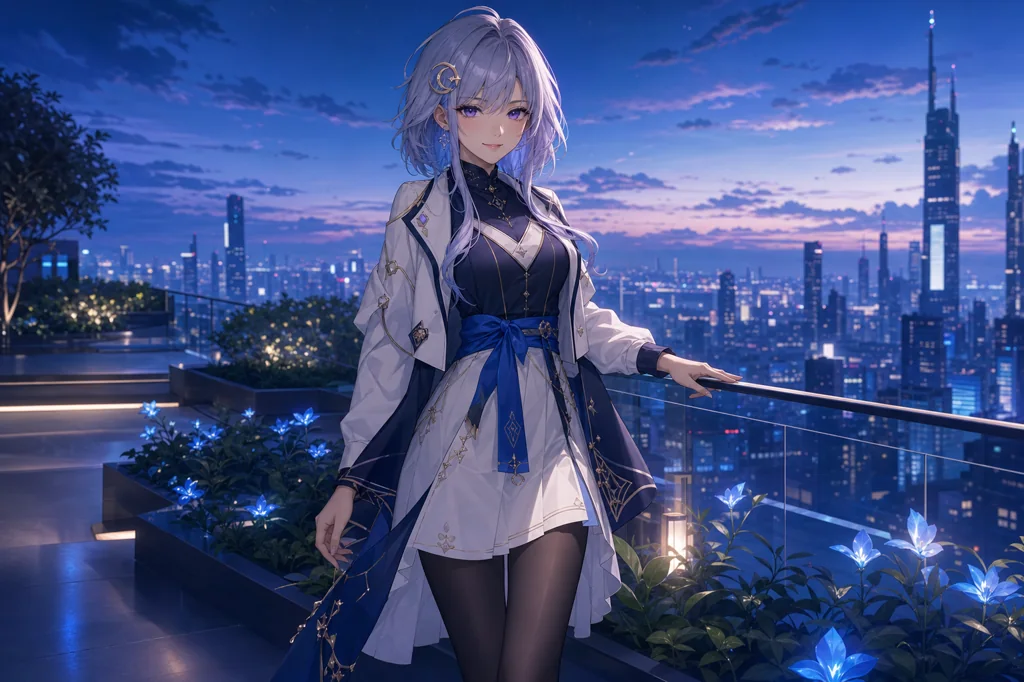
Creating one attractive character image is not the same as designing a character you can use again. If the face, hair length, accessory, and outfit change in the next scene, the first result was a lucky image rather than a stable character.
This guide shows how to create an original adult anime heroine with GPT Image 2 without imitating a real person or an existing franchise, then reuse a character anchor to preserve identity across scenes. “Beautiful anime girl” is used here as a character-design genre; every example clearly depicts an adult and avoids sexualized presentation.
OpenAI’s official GPT Image 2 prompting guide recommends a consistent order: background or scene → subject → key details → constraints, together with the intended use of the image. For character consistency, it demonstrates creating a reusable anchor first and restating invariant details—face, proportions, outfit, and palette—during later edits.
Cover image: put the character DNA into one frame
A cover should do more than look dramatic. It should contain the visual DNA that later images can reuse. Instead of specifying only broad traits such as “silver hair,” combine an eye color, hair silhouette, one asymmetric accessory, signature colors, and an outfit structure.
Our anchor uses shoulder-length silver-blue hair with longer face-framing locks, violet eyes, a crescent clip on the left, a cobalt ribbon, and an ivory-and-navy outfit. The rooftop garden adds mood without competing with the character.
Production prompt for the cover image
Use case: stylized-concept
Asset type: landscape blog hero and reusable character anchor
Primary request: Create an original premium anime-style character illustration demonstrating a beautifully designed adult heroine for a GPT Image 2 character-making guide.
Scene/backdrop: a serene futuristic rooftop garden at blue hour, subtle glass railings, a few glowing blue flowers, soft city lights far behind.
Subject: one original adult woman in her early twenties, clearly adult, with a graceful confident presence; shoulder-length silver-blue hair with two longer face-framing locks, a small crescent-shaped hair clip on her left side, luminous violet eyes, gentle closed-mouth smile. She wears a tasteful non-revealing ivory and deep-navy short jacket over a high-neck dress, cobalt ribbon detail, opaque tights, and sleek ankle boots. Distinctive identity anchors: silver-blue hair, violet eyes, crescent hair clip, cobalt ribbon, ivory-and-navy outfit.
Style/medium: polished semi-realistic anime illustration, refined facial anatomy, elegant character concept art, high-end editorial finish, original design.
Composition/framing: wide cinematic landscape composition, character shown from head to knees slightly off center, face large enough to read, generous environmental space, clean silhouette.
Lighting/mood: soft blue-hour key light, gentle violet rim light, warm skin tones, calm optimistic mood.
Color palette: midnight navy, cobalt blue, violet, ivory, small cyan accents.
Constraints: one person only; adult character; consistent natural hands; tasteful clothing; no text, no logos, no watermark; no resemblance to any existing copyrighted character or real person.
Avoid: childlike proportions, sexualized pose, revealing clothing, exaggerated anatomy, extra fingers, cluttered background.
1. Define invariants before adding beauty adjectives
A short request such as “a beautiful silver-haired anime girl” leaves room for a different interpretation every time. A reusable character needs four groups of decisions:
- Identity: adult age range, facial impression, eye color, hair length and silhouette
- Memory hooks: an asymmetric clip, ribbon, or earring that makes the design recognizable
- Outfit grammar: neckline, jacket length, primary and accent colors, and materials
- Emotional range: a stable baseline such as calm, confident, and kind
More detail is not automatically better. Choose four to six compatible anchors and repeat them with the same wording in every follow-up prompt.
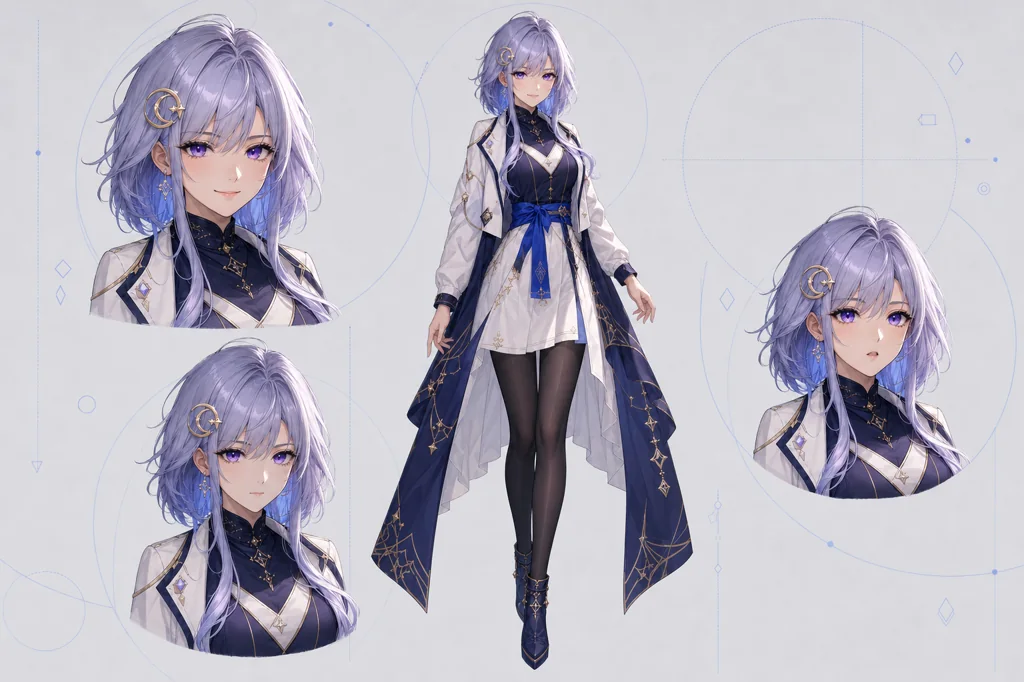
Production prompt for image 2 — character anchor sheet
Use case: identity-preserve
Asset type: landscape blog illustration showing a character anchor sheet
Input images: Image 1 is the exact character identity and visual-style reference.
Primary request: Create a clean professional character-design sheet for the same adult heroine from Image 1.
Scene/backdrop: pale cool-gray studio background with faint cobalt geometric guide shapes, no written labels.
Subject: preserve her exact adult facial identity, silver-blue shoulder-length hair and longer face-framing locks, violet eyes, crescent hair clip on her left side, cobalt ribbon, ivory-and-deep-navy tasteful outfit. Show one full-body neutral pose in the center, plus three smaller head-and-shoulder expression studies around it: gentle smile, focused neutral, surprised but composed.
Style/medium: the same polished semi-realistic anime illustration style and rendering quality as Image 1, premium character concept sheet.
Composition/framing: wide landscape layout, clean spacing, all figures fully inside frame, readable face details.
Lighting/mood: soft neutral studio lighting, accurate consistent colors.
Constraints: do not redesign the character; same facial features, age, proportions, hairstyle, outfit, accessories, and palette; adult woman; tasteful non-revealing clothing; no text, no logos, no watermark.
Avoid: childlike proportions, sexualization, duplicated limbs, cropped heads, written labels, unrelated props.
Keep the background quiet in an anchor sheet so you can inspect the full body, face, hair, accessories, and outfit together. If labels are not essential, omit in-image text and manage variations through filenames or notes instead.
2. Describe poses with actions, not vague adjectives
“A dynamic pose” can mean almost anything. Describe what each hand does, where the gaze goes, and whether the complete body must remain in frame.
- Weak: a beautiful dynamic pose
- Strong: reaching upward with the right hand to release a small paper bird, left arm balancing the body, full figure visible from head to boots in a three-quarter view
For a full-body image, phrases such as full body visible from head to boots, clear hands, and negative space around the silhouette reduce ambiguity. Leave breathing room around hands and feet instead of pushing them against the edges.
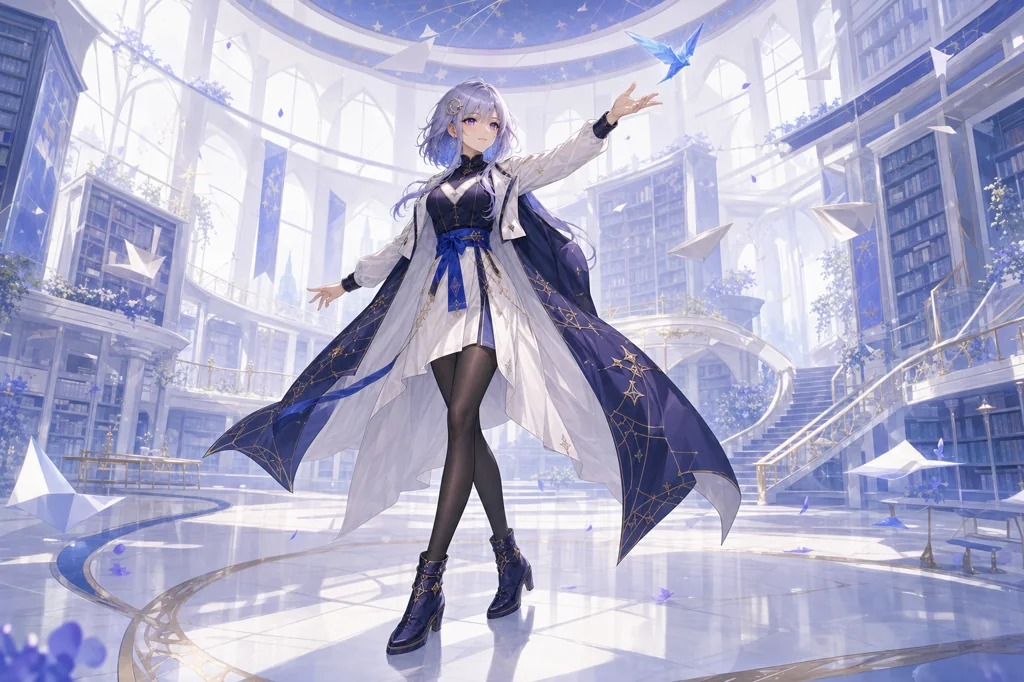
Production prompt for image 3 — pose and silhouette
Use case: identity-preserve
Asset type: landscape blog illustration demonstrating pose, silhouette, and action
Input images: Image 1 is the exact character anchor sheet. Preserve that adult heroine exactly.
Primary request: Show the same adult heroine in a clear, natural action pose as she reaches upward to release a small glowing origami-like blue bird from her open hand.
Scene/backdrop: airy futuristic library atrium with curved shelves, tall windows, and a few floating paper shapes; elegant and uncluttered.
Subject: exact same adult face, silver-blue shoulder-length hair with longer face-framing locks, violet eyes, crescent hair clip on her left side, cobalt ribbon, ivory-and-deep-navy high-neck outfit, opaque tights, ankle boots. Her pose should create a readable S-curve silhouette and natural fabric movement.
Style/medium: same polished semi-realistic anime illustration, premium editorial character art.
Composition/framing: wide landscape frame, full body visible from head to boots, dynamic three-quarter view, clear hands, enough negative space around silhouette.
Lighting/mood: bright diffused daylight with soft cobalt and violet reflections, hopeful and lively.
Constraints: do not redesign character; preserve facial features, adult age, body proportions, hair, outfit, accessories, and palette; one main person only; tasteful non-revealing clothing; no text, no logos, no watermark.
Avoid: childlike proportions, sexualized pose, extreme foreshortening, extra fingers, cropped feet, busy background.
3. Camera and light create emotion
The phrase “high quality” does not specify how a face should look. Separate four decisions in a portrait prompt:
- Framing: face, upper body, three-quarter body, or full body
- Viewpoint: eye-level, slight low angle, or three-quarter profile
- Light: a warm key on the face and a cool rim through the hair
- Emotion: an observable expression such as a gentle smile, quiet focus, or resolve
The next image moves the same character to a rainy platform while locking her face and outfit. Separating the changeable scene from the preserved identity with change only and preserve helps reduce drift.
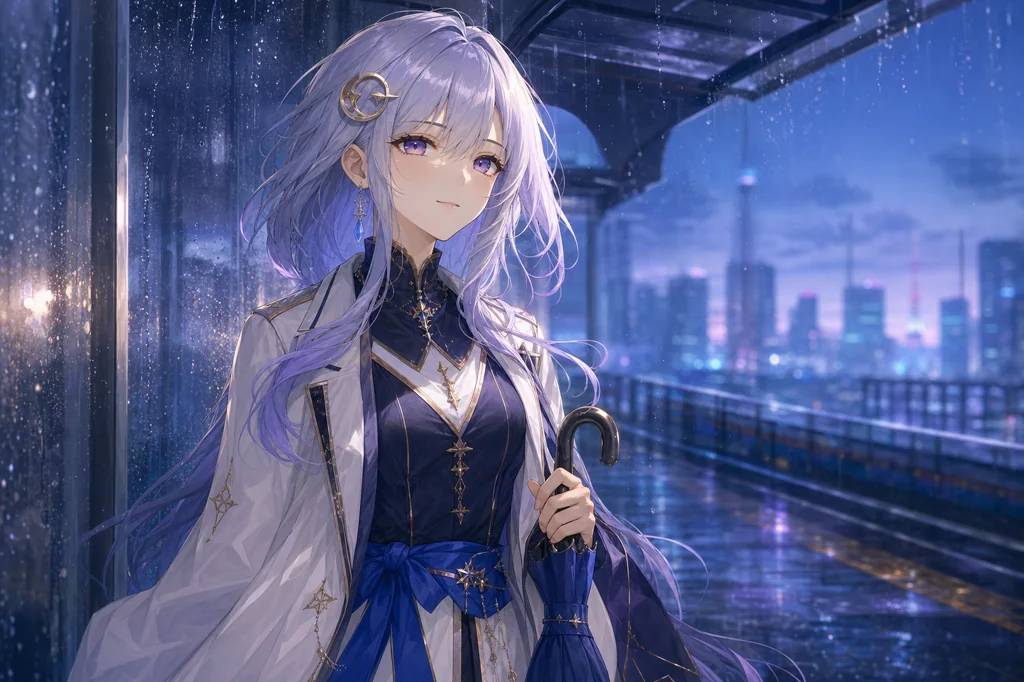
Production prompt for image 4 — camera, lighting, and emotion
Use case: identity-preserve
Asset type: landscape blog illustration demonstrating camera, light, and emotion
Input images: Image 1 contains the exact adult heroine and visual style to preserve.
Primary request: Create a cinematic close portrait of the same adult heroine waiting beneath a transparent shelter at a quiet elevated train platform on a rainy evening. She looks slightly toward the viewer with a thoughtful gentle expression while holding a closed navy umbrella.
Scene/backdrop: rain-streaked glass, distant cobalt city lights and soft violet bokeh, subtle wet reflections, no readable signs.
Subject: preserve the exact adult face, silver-blue hair and long face-framing locks, violet eyes, crescent hair clip on her left side, cobalt ribbon, ivory-and-deep-navy high-neck outfit.
Style/medium: same polished semi-realistic anime illustration, premium cinematic editorial finish.
Composition/framing: wide landscape, head-and-upper-torso portrait, eye-level, face is the clear focal point, umbrella handle and one hand visible naturally, soft foreground raindrops.
Lighting/mood: cool blue ambient light, warm soft key light on face, violet rim light through hair, calm wistful emotion, realistic reflections.
Constraints: do not redesign the character; preserve exact facial features, adult age, hairstyle, accessories, outfit, and palette; tasteful clothing; no text, no logos, no watermark.
Avoid: childlike face, sexualization, crying, extreme blur, neon overload, malformed hand, extra people.
4. Reference-based editing is better than starting over
If you generate from text alone every time, the model can reinterpret the same description. Once the anchor is approved, provide it as an image input and divide the instructions into three roles:
- Input image: identity and style reference
- Allowed to change: environment, action, camera, and lighting
- Must not change: face, adult age, proportions, hair, accessory, outfit, and palette
OpenAI’s official character-consistency example follows this pattern: create the anchor, then continue with an image edit. Change only the scene or pose first; avoid changing wardrobe, background, expression, and medium in the same step.
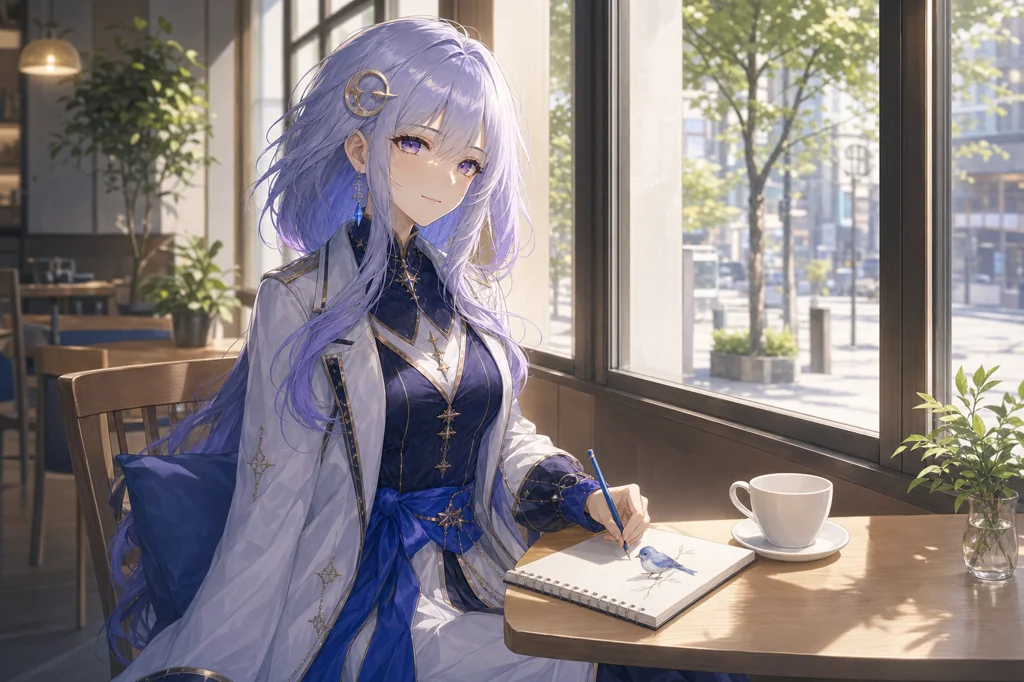
Production prompt for image 5 — consistent scene edit
Use case: identity-preserve
Asset type: landscape blog illustration demonstrating character-consistent scene editing
Input images: Image 1 is the exact adult heroine identity and style reference.
Primary request: Place the same adult heroine in a new everyday scene, seated beside a sunlit café window while sketching a tiny blue bird in a cream notebook. She pauses and gives a soft confident smile toward the viewer.
Scene/backdrop: quiet modern café in late morning, pale wood table, one white ceramic cup, gentle greenery, soft city street beyond the window, no readable signs.
Subject: preserve the exact adult facial identity, silver-blue shoulder-length hair with longer face-framing locks, violet eyes, crescent hair clip on her left side, cobalt ribbon, ivory-and-deep-navy high-neck outfit. Natural seated pose and hands, same accessories and palette.
Style/medium: same polished semi-realistic anime illustration, refined editorial character art.
Composition/framing: wide landscape, three-quarter seated view from head to knees, face and drawing hand clearly visible, calm clean composition.
Lighting/mood: warm window daylight balanced with cool cobalt shadows, peaceful approachable mood.
Constraints: change only the scene and pose; do not redesign the character; preserve face, adult age, proportions, hairstyle, outfit, accessories, and color palette; one person only; tasteful clothing; no text, no logos, no watermark.
Avoid: childlike proportions, sexualization, extra fingers, distorted notebook, additional people, clutter, dramatic fantasy effects.
5. A reliable generation order
- Write four to six defining traits and explicitly state that the character is an adult.
- Generate the first anchor against a simple background.
- Inspect the face, hands, full silhouette, and outfit boundaries.
- Confirm the outfit and expressions with a character sheet.
- Use the anchor as a reference and change only one pose.
- Once the face remains stable, vary the environment and lighting separately.
- Revise one element at a time: “change only X; keep everything else unchanged.”
OpenAI Academy likewise recommends establishing the core image first, then making small targeted revisions and repeating the most important constraints to prevent drift.
Common failures and fixes
Mixing too many media
Do not combine “anime, photorealistic, watercolor, 3D, oil painting” in one prompt. Choose one primary medium and only the texture cues that support it.
Relying on an existing character or artist name
Instead of cloning a franchise or artist, describe line density, coloring, materials, lighting, and composition in general visual language. This produces a more ownable design and reduces rights-related risk.
Writing only negative instructions
Define the desired result positively first, then finish with a short list of essential exclusions.
Changing everything at once
If face, wardrobe, pose, and background all change together, you cannot identify the source of drift. Roll back one element with a precise instruction such as “change only the background; preserve the exact face...”.
Reusable starter template
Use case: identity-preserve
Asset type: [blog illustration / character sheet / portrait]
Input images: Image 1 is the exact character identity reference.
Primary request: Show the same original adult character [doing one observable action].
Scene/backdrop: [place, time, and only the essential props].
Subject: preserve [age, face, hair silhouette, eye color, signature accessory, outfit, palette].
Style/medium: [one primary visual medium and rendering level].
Composition/framing: [camera distance, viewpoint, body crop, negative space].
Lighting/mood: [key light, rim light, color temperature, observable emotion].
Constraints: change only [scene/pose/lighting]; keep identity and outfit unchanged; no text, no logo, no watermark.
Avoid: childlike proportions, sexualization, anatomy errors, clutter, copyrighted character resemblance.
Conclusion
The key to a compelling anime heroine is not the number of beauty adjectives but the consistency of visual decisions. Establish an original adult character’s face and memory hooks in an anchor image, then state what must remain unchanged more clearly than what should change.
GPT Image 2 supports high-quality generation and editing, flexible sizes, and high-fidelity image inputs, but results still vary with prompts and references. Compare variants and inspect hands, eyes, accessories, and garment boundaries at full size before publishing.
Sources
- OpenAI — GPT Image Generation Models Prompting Guide
- OpenAI Academy — Creating images with ChatGPT
- OpenAI API — GPT Image 2 model
- OpenAI API — Image generation guide
Generative images can contain anatomical errors or unintended resemblance. Confirm rights and consent before using a real person’s face, and manually review final assets intended for public or commercial use.